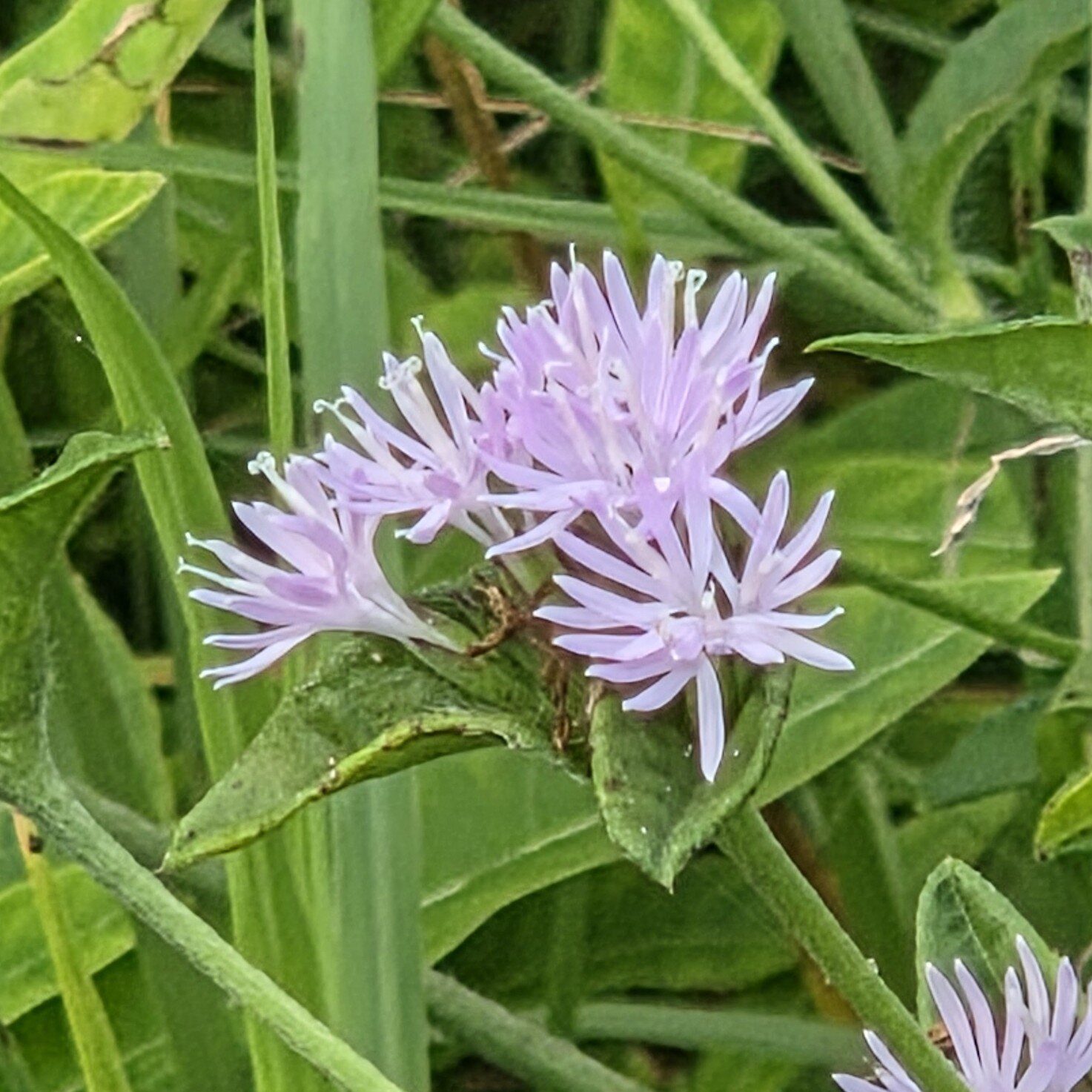
Some native plants specialize in supporting a particular butterfly, bee, or moth.
Carolina elephant’s foot (Elephantopus carolinianus) is different. It welcomes everybody!
Its flowers are small, open, and packed with easily accessible nectar. Tiny sweat bees, small native bees, beneficial wasps, beetles, flies, butterflies, and bumble bees can all feed from the same plant. The sturdy flower stems easily support larger visitors, while the shallow blooms make nectar available to insects with even the shortest tongues.
Instead of catering to a select few, Carolina elephant-foot creates a seat at the table for almost every pollinator that stops by.
And it’s just as generous in the garden.
It grows in sun or shade, tolerates dry conditions once established, and shrugs off the kinds of challenges that would set many plants back. Mow it? It’ll return. Step on it? It’ll recover. Leave it alone? It’ll quietly come back year after year.
Not every native plant has to be rare, delicate, or specialized.
Sometimes the most valuable plants are the ones that feed the greatest number of creatures while asking almost nothing in return.
And there’s a good chance you already have it.
Carolina elephant-foot commonly pops up in lawns, garden edges, woodland borders, and other overlooked corners of our properties. Before you mow, take a look around for its distinctive basal rosette, a cluster of large leaves that hugs the ground. If you find it, it is easy to transplant and recovers quickly.
You might discover that one of the best pollinator plants around has been growing in your yard all along.