Sometimes the best reason to grow a native plant isn’t the flower.
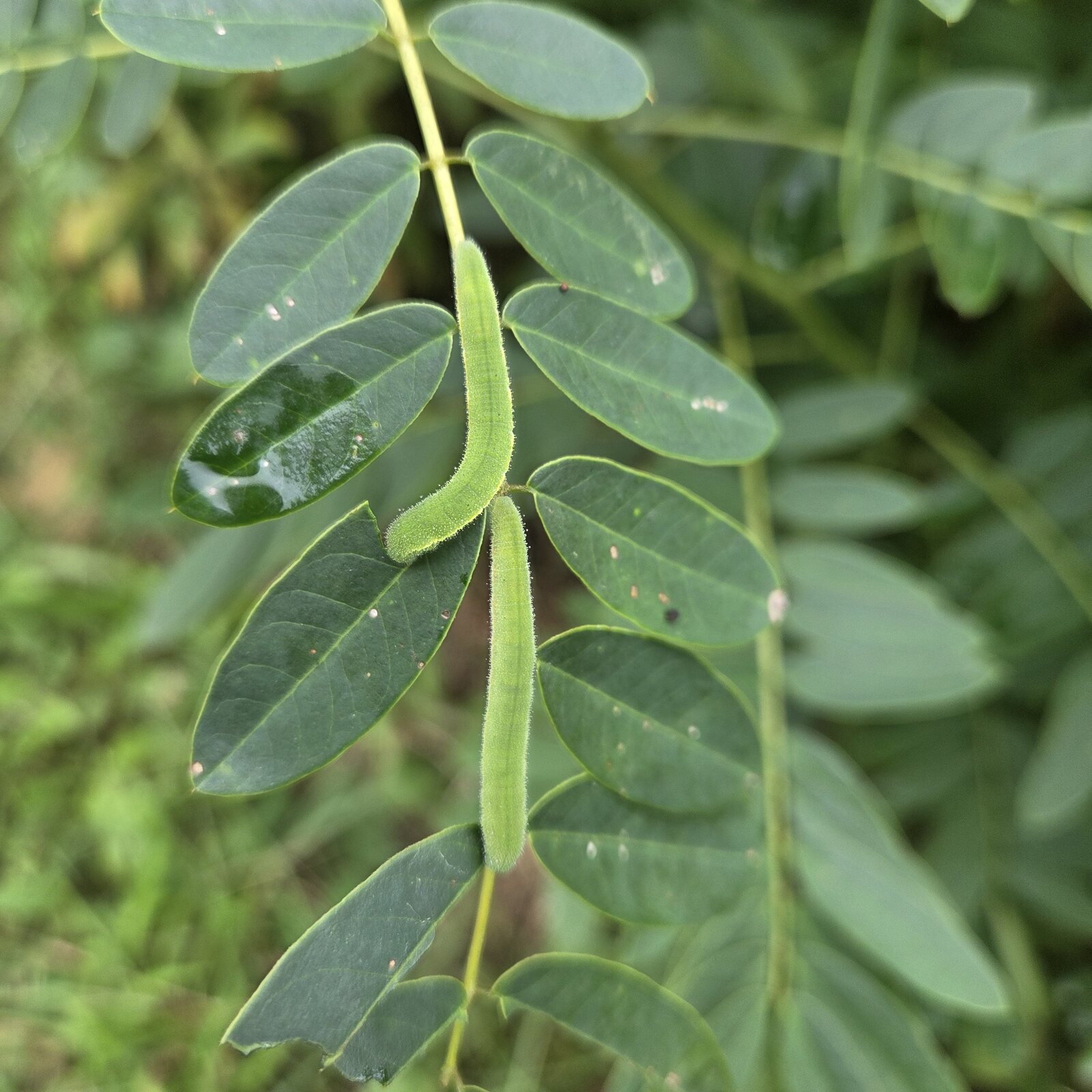
One morning, I was lucky enough to find Sleepy Orange caterpillars feeding on my Maryland Senna (Senna marilandica).
Maryland Senna is a beautiful native plant in its own right, with bright yellow flowers in summer. But it also has an important relationship with several sulphur butterflies, including the Sleepy Orange (Abaeis nicippe). Its foliage provides food for their caterpillars, making the plant part of the butterfly’s life cycle.
And once I knew the caterpillars were there, I started paying much closer attention.
Look a Little Closer
I could see adult Sleepy Orange butterflies fluttering around the Maryland Senna, too, but getting a photograph of one was another matter entirely.
They weren’t politely landing and waiting for me.
They were constantly on the move, fluttering through and around the plants. And something else made them surprisingly difficult to follow.
By this point in the season, some of the Maryland Senna’s leaves were beginning to yellow.
Against those yellowing leaves, the orange and yellow butterflies could almost disappear.
One moment I could see a butterfly clearly. The next, it seemed to vanish into the plant.
It was a wonderful reminder that sometimes camouflage doesn’t look the way we expect it to.
A Plant Is More Than Its Flowers
It’s easy to choose native plants because we like their flowers.
But when we begin looking more closely, we realize how much more is happening.
A Maryland Senna isn’t simply producing yellow flowers for us to enjoy. Its leaves are feeding caterpillars. Those caterpillars are becoming butterflies. Adult butterflies are moving through the garden. And the plant itself can even provide a backdrop where those butterflies become surprisingly difficult to see.
Those relationships are one of the reasons I find native plant gardening so interesting.
The more life a garden supports, the more there is to discover.
Sometimes you just have to look a little closer.
To see more of what we’re growing, learning, and discovering around the farm, follow us on Stover Mill Farm on Facebook.