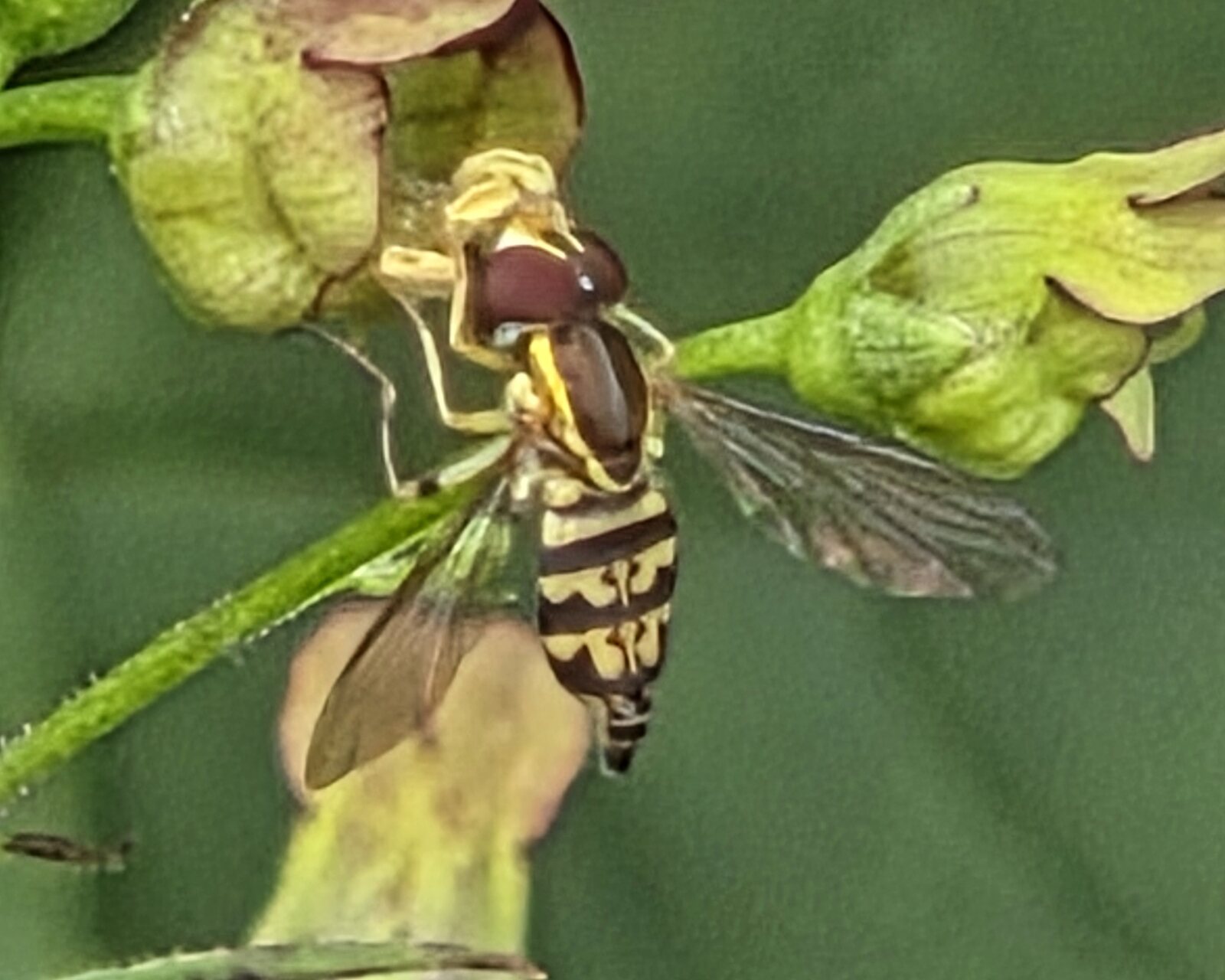
At first glance, the Eastern calligrapher fly (Toxomerus geminatus) looks a bit like a tiny bee. But don’t worry, it doesn’t sting, bite, or bother people. It’s one of the garden’s most helpful insects.
The adults spend their time visiting flowers for nectar and pollen. In this photo, one is enjoying the blooms of Maryland figwort (Scrophularia marilandica), a native plant that provides an important food source.
The real magic happens in the next generation.
After feeding on flowers, female calligrapher flies lay their eggs near aphid colonies. When the larvae hatch, they become tiny but voracious predators, consuming dozens of aphids before they mature. Those aphids are among the most common pests in our gardens, and these little flies help keep them in check without a drop of pesticide.
If you’d like to invite more of these beneficial insects into your garden, plant a variety of native flowers with small, open blooms. Maryland figwort is one of my favorites. Its nectar-rich flowers are packed with rewards and are easy for hoverflies and many other beneficial insects to access. Goldenrods, mountain mints, asters, black-eyed Susans, and many other native plants also provide valuable nectar throughout the growing season.
This is one of the many reasons we grow native plants. They don’t just feed butterflies and bees. They also support the beneficial insects that quietly help keep garden pests in balance.
Nature knows best. The more we support the relationships that have evolved here over thousands of years, the more our gardens begin to care for themselves.