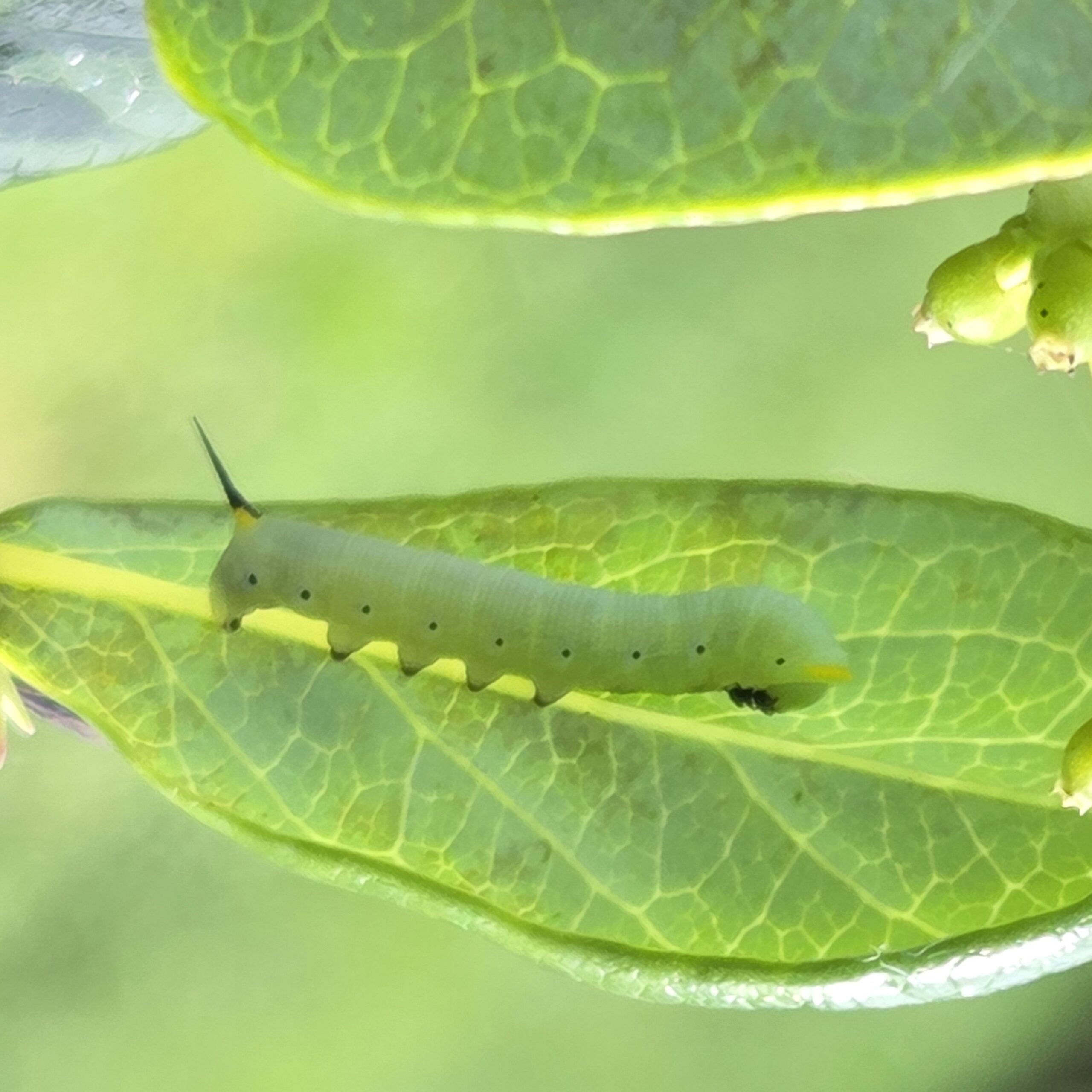
and I could not be more thrilled!!
All summer long, I’ve been seeing Snowberry Clearwings (Hemaris diffinis) visiting flowers around the farm.
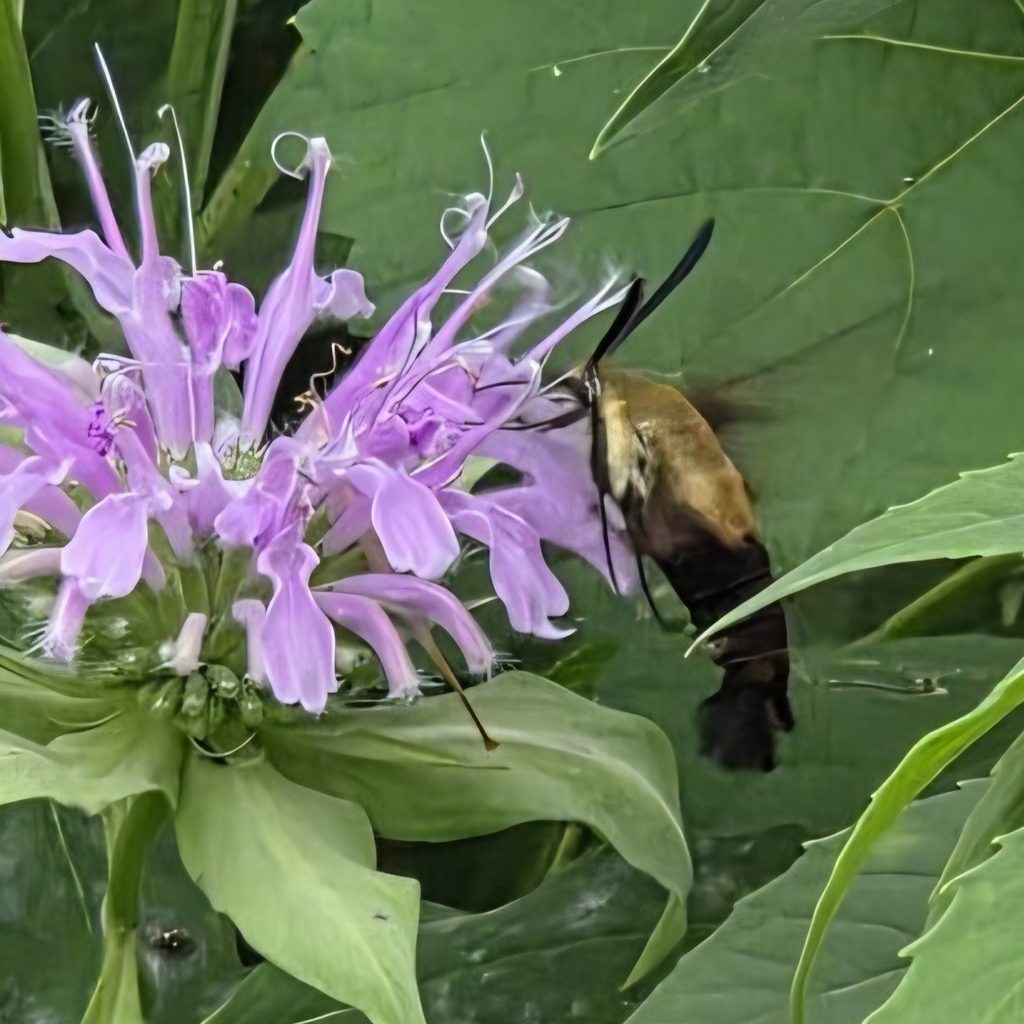
These remarkable little moths, sometimes called hummingbird moths because of the way they hover from flower to flower, are incredibly fun to watch, and not particularly easy to photograph!
Today, though, I got to see a completely different part of their life cycle.
I was walking past one of our Coral Honeysuckle (Lonicera sempervirens) vines when I noticed that somebody had been helping themselves to the leaves. A closer look revealed not one, but three beautiful Snowberry Clearwing caterpillars quietly munching away.
I was thrilled.
Snowberry Clearwings are somewhat specialized when it comes to raising their young. Their caterpillars don’t eat just anything. They rely on a relatively limited group of host plants, including honeysuckles, snowberries and coralberries, bush-honeysuckle, and dogbanes. Our native Coral Honeysuckle is a well-documented host plant, and observations from the Piedmont suggest that it may be a particularly favored one in our region.
That makes finding these caterpillars especially meaningful. I’ve been watching the adult moths feeding from flowers around the farm all summer, and now I’m seeing the next generation growing up here as well.
And the relationship doesn’t end when the caterpillars finish eating. When they’re ready to pupate, Snowberry Clearwing caterpillars leave their host plant and form a loose cocoon at or near ground level, often among fallen leaves and other plant material. Eventually, an adult Snowberry Clearwing emerges and the cycle begins again.
It’s a wonderful reminder that supporting wildlife requires more than providing flowers for adult pollinators. They need places to reproduce. They need the right plants for their young to eat. And sometimes they need the leaves we leave lying on the ground.
We often look at a chewed leaf and think something is wrong. But increasingly, I see it very differently.
Those missing pieces of Coral Honeysuckle leaves?
Not damage. Just evidence that the garden is working.