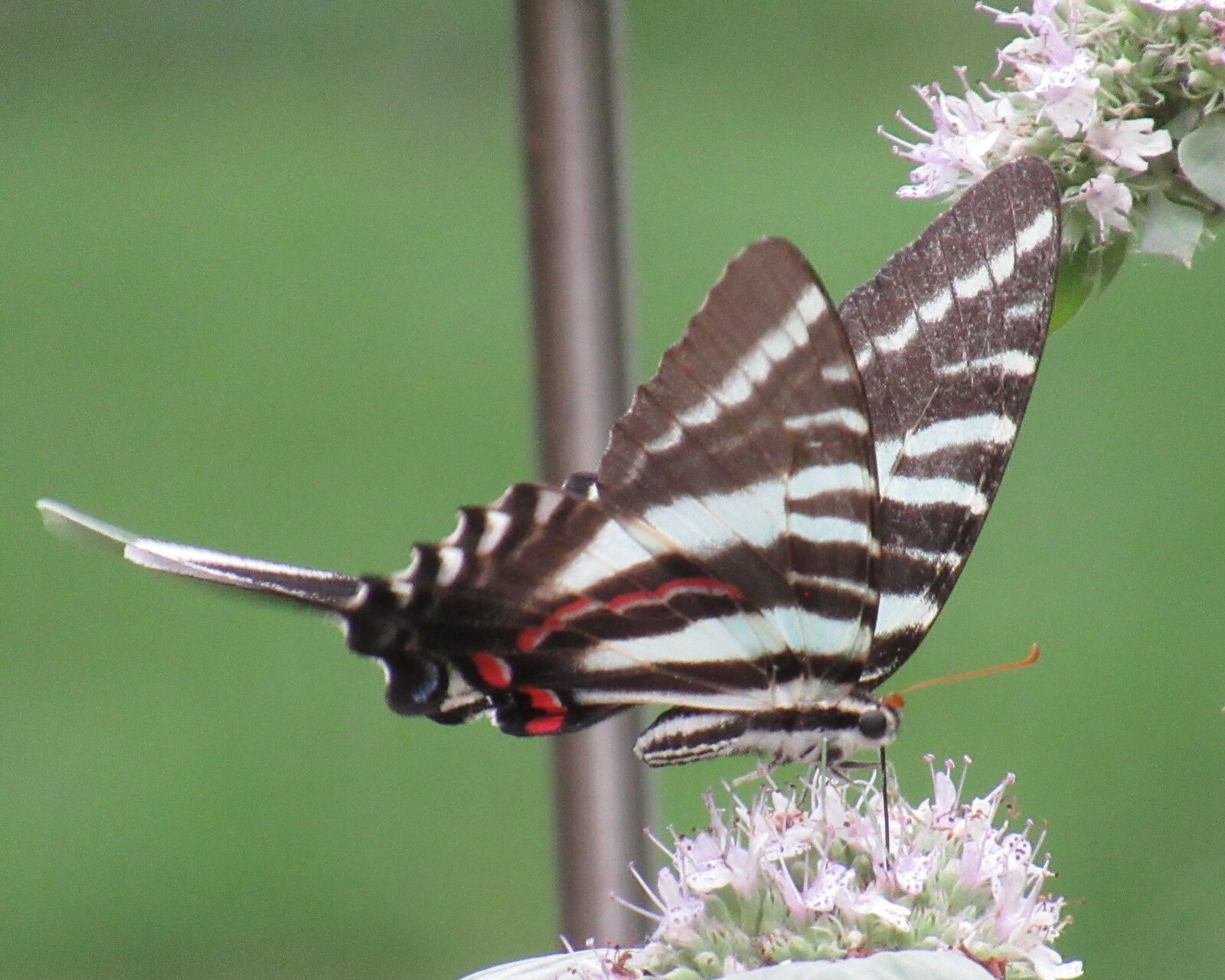
Every time I see a Zebra Swallowtail, I’m reminded that this butterfly exists because of one remarkable native tree: the pawpaw.
Just like the Great Spangled Fritillary depends on native violets, the Zebra Swallowtail depends almost entirely on pawpaw trees to raise its young. And much like the Monarch’s relationship with milkweed, the female Zebra Swallowtail lays her eggs on the one plant her caterpillars are adapted to eat. Once they hatch, the caterpillars spend about 2–3 weeks feeding and growing through five instars before forming a chrysalis. During the summer, the adult butterfly typically emerges another 2–3 weeks later, completing the journey from egg to butterfly in as little as 4–6 weeks. The final generation of the season overwinters in its chrysalis, emerging the following spring.
Unlike Monarchs, which migrate thousands of miles each fall, Zebra Swallowtails stay close to home. Their story isn’t one of epic migration, it’s one of remarkable specialization. Over thousands of years, they’ve evolved alongside pawpaws, whose leaves contain compounds that would deter most insects. Zebra Swallowtail caterpillars have adapted not only to tolerate those compounds but to use them as a form of protection from predators.
Every pawpaw planted is an investment in that story. And every Zebra Swallowtail drifting through the garden is proof that those ancient relationships are still alive.